
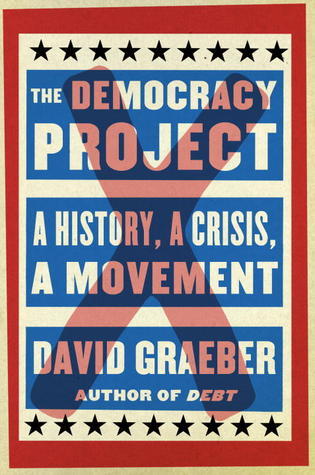
Democracy Project: A History, A Crisis, A Movement
I recently finished reading Democracy Project by David Graeber. It was part a trip down nostalgia lane and part a refresher course on politics. I would say the book revolves around Occupy Wall Street. I was living in the US while all of that was happening and remember the sense of hope at the time. It was after the 2008 economic crisis. You could see people living rough still all around the country. In the middle of all that suffering, Occupy on the left and the Tea Party on the right, it seemed like change was in the air. Of course, now that history has unfolded itself, we know how the Tea Party was co-opted and turned into MAGA, and Occupy was quashed. Still, the book reminded me of that optimism, of the hope that something was about to change for the better.
Beyond the nostalgia, I also enjoyed the lessons on non-hierarchical organization, how cooperation with mainstream political groups fell apart, and how the movement resisted and was ultimately beaten by (perhaps illegal) police action. The one point that Graeber makes that will stick with me is how we are reduced to fighting against further deterioration of our situation rather than fighting for improvements.
In discussing a protest movement in NY against budget cuts, Graeber makes an excellent observation. The moderate position was to accept some cuts, and the radical position to reject all cuts. “I was just following along nodding my head, and suddenly I realized: wait a minute! What is this guy saying here? How did we get to a point where the radical position is to keep things exactly the way they are?” So the option of demanding an increase in budget is off the table even in the opposition camp.
This deterioration of options is common these days. In my youth, I was able to hold on to a belief that things would improve for all of us. Now, I just hope they don’t increase the retirement age further. Increasingly, I feel like we are lulled into accepting a discourse where our options are defined ahead of time for us. What I see is that the people are constantly told to choose between bad and worse options.
I am currently reading through Abaddon’s Gate by James S. A. Corey; here is a quote to follow up on this: “Violence is what people do when they run out of good ideas.” The political establishment has taken ideas that would improve the lot of regular citizens off the table. The established left-wing parties are dragged into culture wars and have left the policy field to the centrist/capitalist position to define. In this environment, regular citizens are losing hope and are looking for scapegoats. In my opinion, this is what is driving the rise of fascism in the world.
The book exhorts radical democracy and decentralized process as a way of empowering the citizenry. This is the ethos I grew up in. I am not sure if I still believe in everything I believed in back then, but I still am charmed by the ideals of it. In that sense, the book was also a refresher on politics that I had stepped away for a while.